The bill keeps growing
Apps, plugins and fees stack up after launch. We list every cost category before you commit, and remove tools the store does not use.

Ecommerce engineering
Shopify, WooCommerce or a custom store. We build only the catalogue, checkout and connections you still need, then host and look after the technical side.
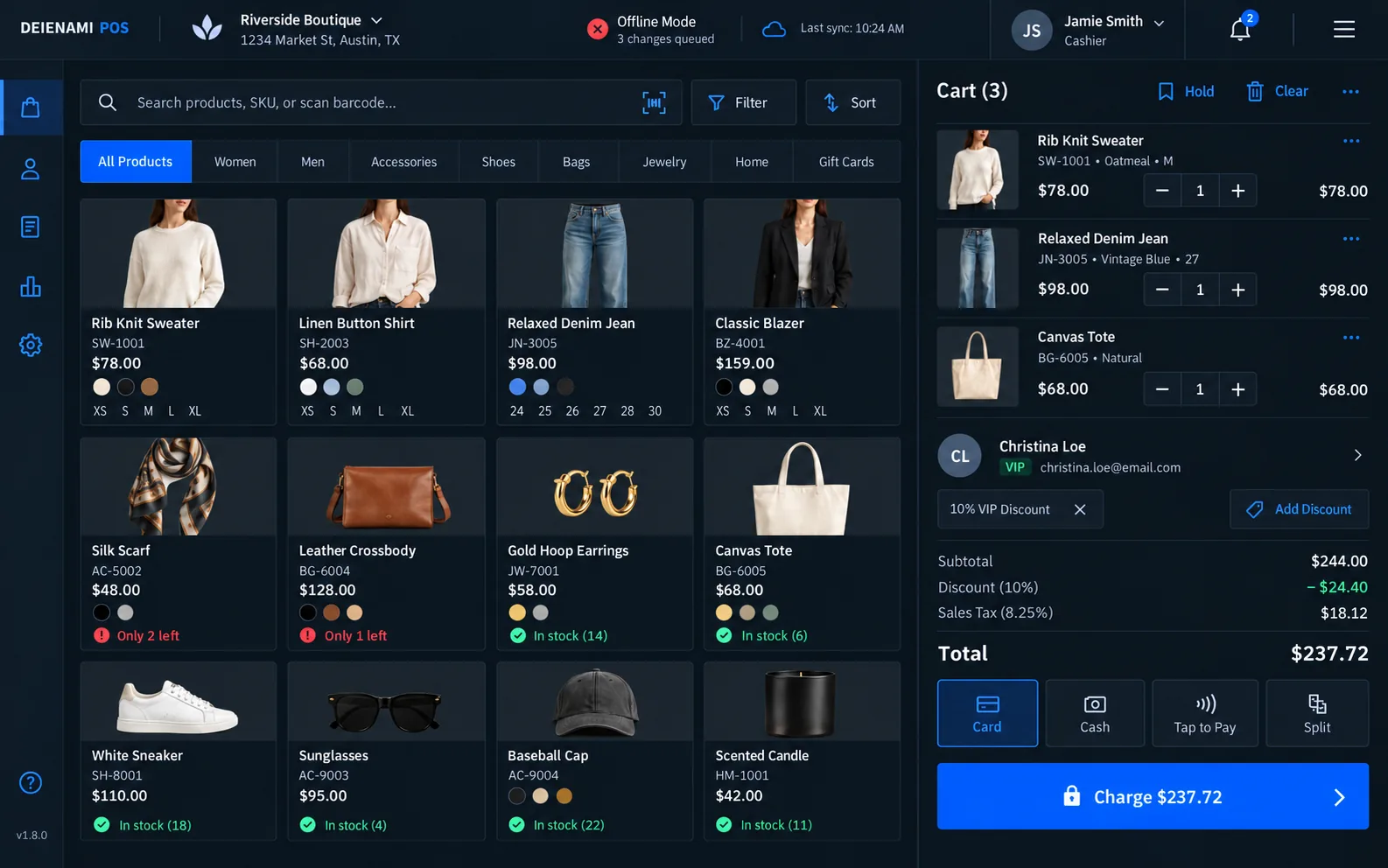
Sample store. Tap a product, choose a colour, add it to the bag. No payment is taken.
These are the situations we are asked to fix. The response is specific, and it is written into the scope before work starts.
Apps, plugins and fees stack up after launch. We list every cost category before you commit, and remove tools the store does not use.
A plugin or theme update fails at the worst moment. We test updates where the platform allows, and fix issues inside the care plan.
Extra steps and surprise costs drop a sale you already earned. We walk product to payment on a phone and remove avoidable steps.
Heavy pages and stacked scripts cost buyers. We audit speed, lighten the pages that sell, and set a budget for new work.
When something fails you get a forum. Under the plan you get one technical contact who has seen this store before.
More channels or more shops need workarounds. We say whether to improve it, extend it, or build only the part a platform cannot do.
Three parts, one engagement. You do not pay us to rebuild a checkout Shopify or WooCommerce already does well.
1 · Platform
Shopify when you want a managed start. WooCommerce when you want WordPress. A custom build when account pricing, many locations or an unusual checkout cannot live on a theme.
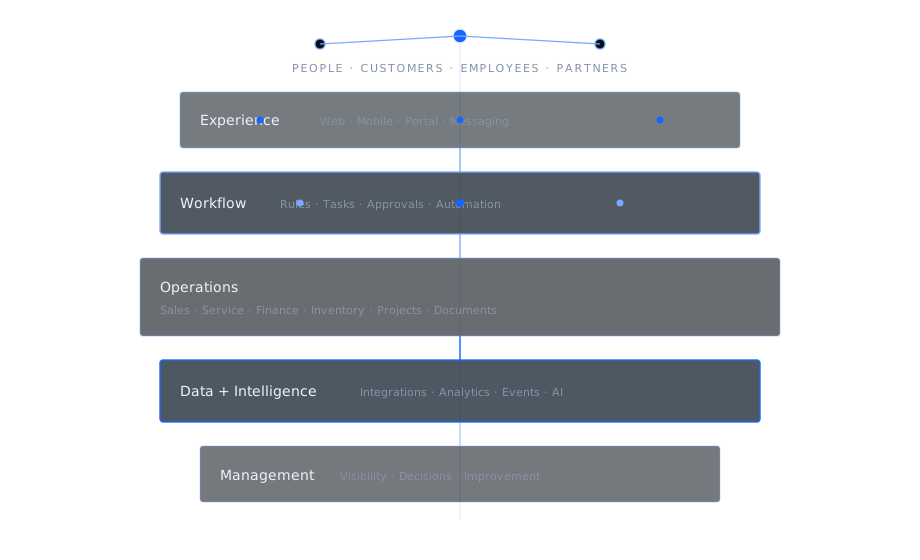
2 · Only the gap
Marketplace listings, a second shop, account-specific prices, or a counter that must share stock. If the platform already does the step, we leave it.
3 · Counter and care
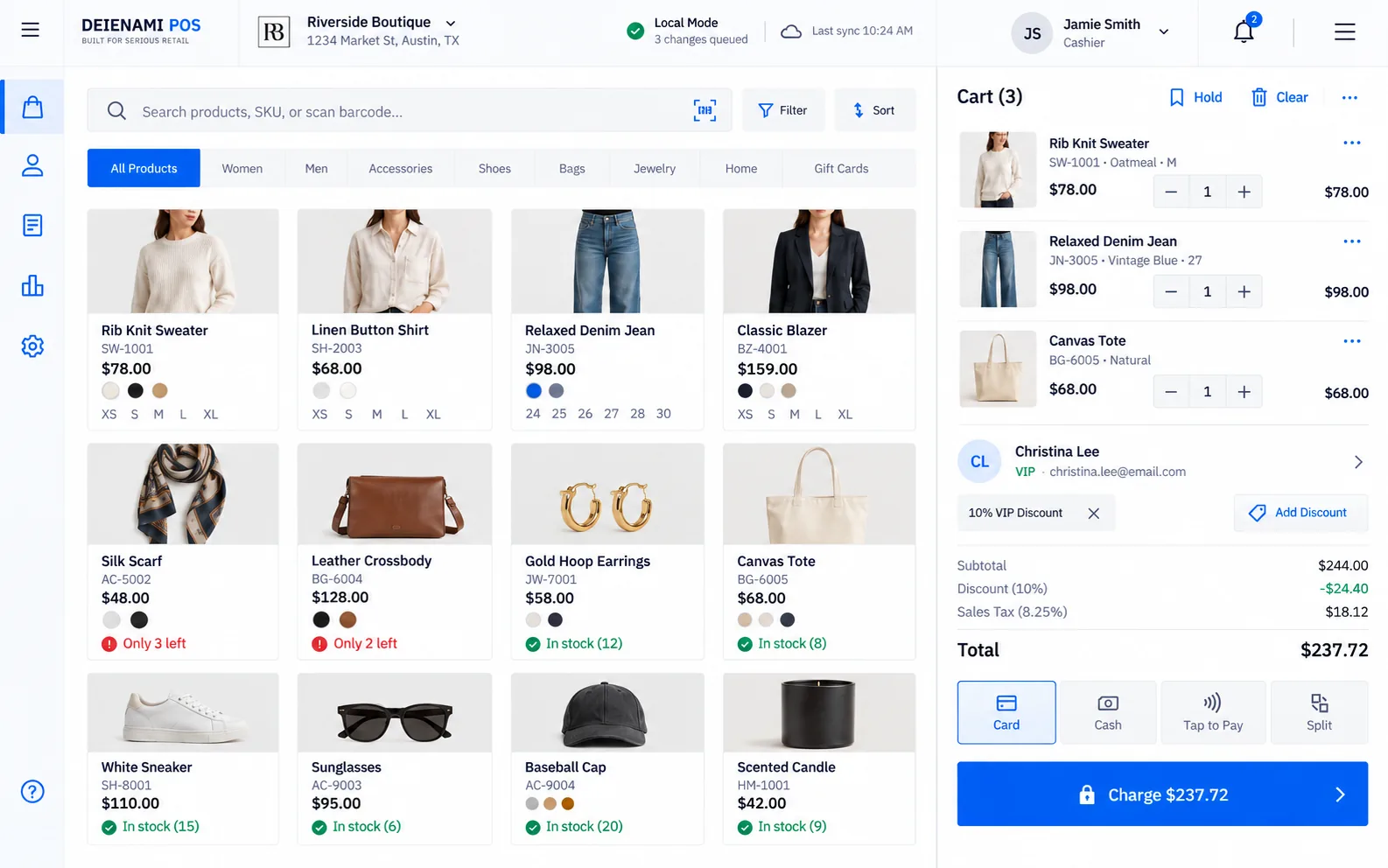
SnapOS covers the counter when you sell in a shop. Hosting and care cover updates, backups, monitoring and a person who answers.
The route changes with the number of shops and channels. Pick the one that matches, then use the plan below to confirm it.
One shop, or a first store. Easy to run, able to take payment on day one.
Shopify for the quickest managed start. WooCommerce if you want WordPress.
Plan a small storeMore products, more than one channel, and systems that have to share a catalogue.
Shopify with the integrations you need. Custom when the buying rules are unusual.
Plan a growing storeMany shops that should share one catalogue and one stock count, including the counter.
Custom build for shared stock. Shopify or WooCommerce when POS and ERP links are enough.
Plan a multi-store setupListings, stock and orders stay in step. Each marketplace sets its own fees, rules and seller approval. We scope every connection on its own.
The home of the brand. It holds the master catalogue, prices and stock.
Listings from your catalogue, with stock and orders synced. Pricing rules are scoped per project.
For handmade and design-led goods. Listings stay consistent with the store.
Catalogue and orders in one flow, scoped to the seller programme you are on.
SnapOS sales, returns and variants update the same stock the website uses.
Tell us where you sell. We confirm what is possible before it is in the quote.
Six questions. You see a suggested route before you send anything. Sending it is optional.
A store project leaves a working shop and a written scope, not a theme preview with no owner.
A sample storefront you can open, a multi-store case, and the counter product. Measured client results are shared only with permission.
You run the business. We take the technical side under a plan. Extra design and new integrations are quoted separately.
We handle structure, variants, checkout and a phone review.
You keep product facts, photos and approvals.
We handle payments, agreed integrations, testing and handover.
You keep the final sign-off and the announcement.
We handle updates, security maintenance, backups, monitoring and fixes inside the plan.
You keep products, prices, customers, fulfilment and ads.
We handle speed, checkout and integrations already in scope. New features are quoted.
You keep the priority of what to change next.
We do not promise uninterrupted uptime or unlimited support. Hours and response are the ones in the agreement.
The contract still sets the exact scope for your store.
It depends on your products, budget, how much you want to manage and what you use today. We explain the trade-offs of Shopify, WooCommerce and a custom build in plain language and recommend what genuinely fits.
Yes. We can improve design, speed, checkout and integrations, and look after updates and technical support under an agreed plan.
Not automatically. We assess your store first. Sometimes improving it is the better decision. If a move makes sense, we plan redirects, data and a rollback strategy.
Under an agreed plan: hosting coordination, updates, security maintenance, backups, monitoring, troubleshooting, integration upkeep and technical support. The scope is written down before you commit.
Product management, customer service, order fulfilment, advertising and day-to-day business operations stay with you unless agreed otherwise in writing.
No. We do not promise uninterrupted uptime. We monitor the store and respond within the scope and hours we agree.
Yes. Many first-time sellers begin with a focused store and add features later. We tell you what is realistic for your budget before work starts.
What you sell, your current website if you have one, your main goal and the platform you prefer, or not sure. We reply with fit, a sensible next step and what we need.
Which platform already fits, what still has to be built, and whether we should host it.