The first screen does not say what you do
A visitor cannot tell who it is for or what to do next. We rewrite the opening around one action.

Website engineering
SiteCraft when you need a fast custom site. WordPress, Shopify, Wix or Framer when the current site should stay. We build only the pages, speed and connections still missing, then host it.
These are the situations we are asked to fix. The response is written into the scope before design starts.
A visitor cannot tell who it is for or what to do next. We rewrite the opening around one action.
Images and scripts delay the page that should earn the enquiry. We cut weight and set a budget for new work.
WordPress, Shopify, Wix or Framer still fits the business, but the theme, plugins or speed do not. We repair that before anyone talks about a rebuild.
Titles, structure and page speed are weak. We fix the pages people should find, and we do not promise rankings.
Enquiries sit in an inbox with no owner. We connect the form to the system your team already uses.
Updates, certificates and backups are informal. Hosting on SiteCraft, or a care plan for the platform you have, names who does that work.
Three parts. You do not pay for a new site when the current platform can carry the work.
1 · Platform
SiteCraft for a custom, search-ready site we host. WordPress, Shopify, Wix or Framer when that is already how you publish.
2 · Only the gap
Speed, a broken template, a missing service page, or a connection to CRM, booking or inventory. If the platform already does the step, we leave it.
3 · Hosting
SSL, CDN, backups, monitoring and support hours are the care plan. Design changes are quoted separately. You can host elsewhere when the project allows.
Sample sites
Five live sample sites built on SiteCraft, our own platform. Open them, scroll them, switch to mobile. They show how we structure, design and build; they are not client projects.
Case studies: websites and the business systems behind them
Problem and opportunity
Same business. Two very different first impressions. This is an illustrative comparison of a fictional business, not measured data.
TypicalEight links compete for attention
OursFour clear choices
TypicalEverything shouts at once
OursOne headline, one action
TypicalTiny, crowded tap targets
OursLarge targets, readable text
TypicalLong, dense paragraphs
OursShort, specific copy
Website assessment
Enter your address and we run a real Google PageSpeed Insights test of the mobile page: speed, accessibility, best practice and search basics. It does not judge your design or message, and can take up to a minute.
Prefer a person? Request a written site review.
Results for your address appear here. Nothing is shown until a real test has run.
Our difference
Our custom sites run on SiteCraft, DEIENAMI's own website platform: page rendering, content model, SEO and structured data, lead capture and analytics hooks in one tested core.
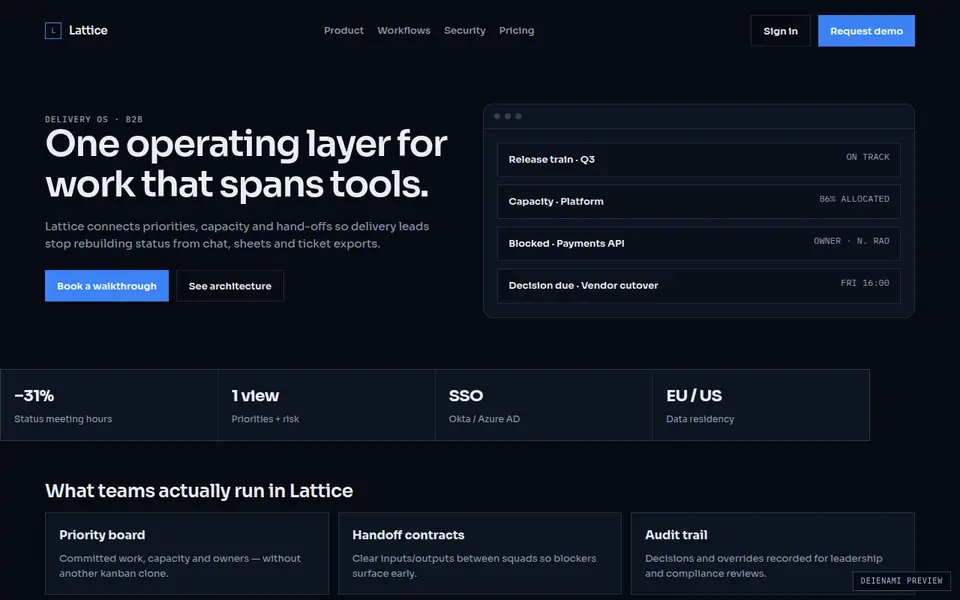
We design around customers, business objectives, and measurable commercial outcomes.
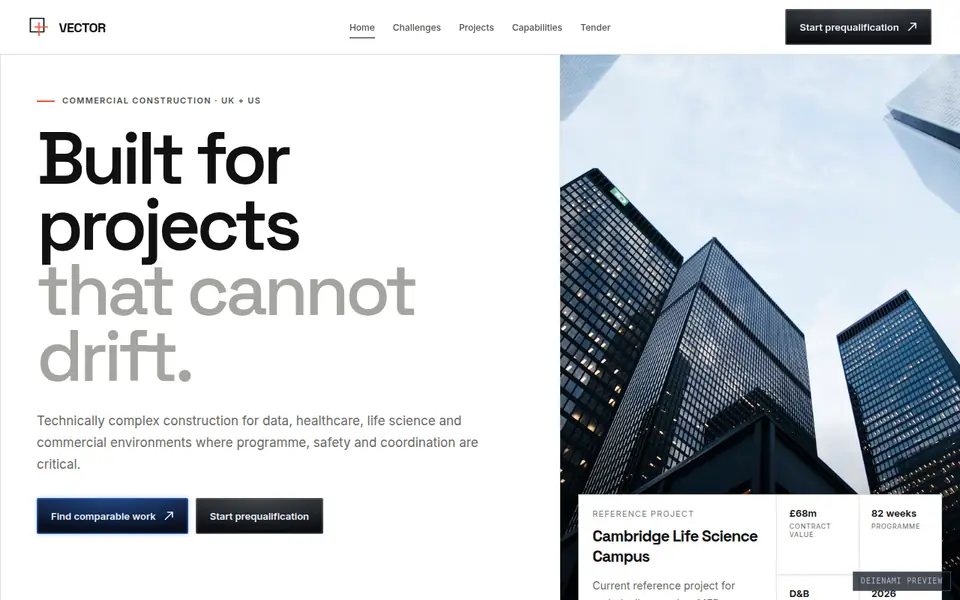
We build maintainable digital platforms using architectures appropriate to each business.
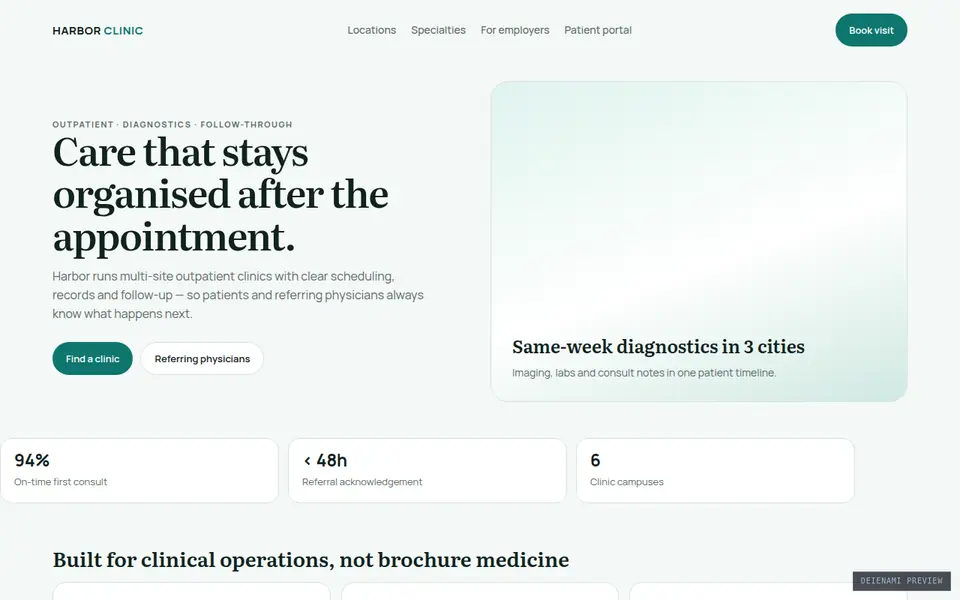
Responsiveness, accessibility, speed, and reliability are considered from the beginning.
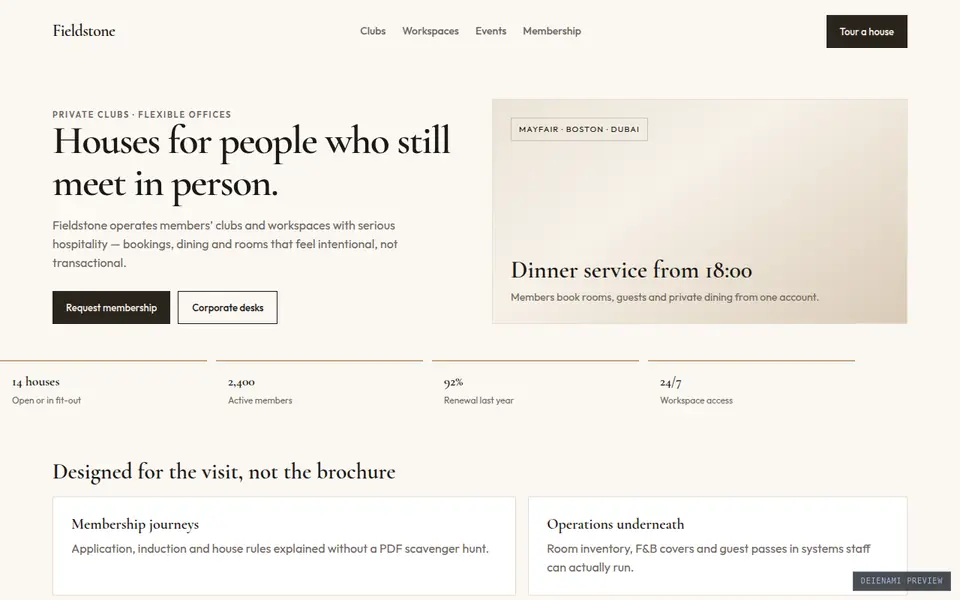
Our solutions accommodate future improvements, integrations, analytics, and business growth.
Engineering visualization
Select a layer to see what it does for your business, or separate the stack to see how the layers connect.
Every detail you see is supported by engineering you don't.
Platforms we work on
Whatever your site runs on today, we look after it. When speed, SEO or control become the limit, SiteCraft is the upgrade.
SiteCraft is DEIENAMI's proprietary platform. It is HTML-based, not a drag-and-drop builder, so pages stay lean: quick to load, clean for search engines, and free of the plugin and script weight that slows many sites down.
Already on another platform? We can move you across and plan redirects so you keep your search visibility.
Discuss a SiteCraft websiteKeep your WordPress site designed well, updated and secure. We take care of the work that gets neglected, so the site stays fast and safe.
Hitting limits on speed, SEO or control? SiteCraft is the upgrade, with redirects planned to protect your rankings.
Discuss my WordPress siteShopify sites that look right, load quickly and stay up to date. We design, tune and maintain them so they keep working for your business.
Need a faster, more controlled website alongside it? SiteCraft can sit in front of the rest of your business.
Discuss my Shopify siteA Wix site set up properly: clear structure, sound SEO settings and a design that looks considered. We improve it and keep it current.
Outgrowing Wix? SiteCraft is the next step, with redirects planned so you keep your search visibility.
Discuss my Wix siteFramer sites can look excellent. We build and polish them, then check performance and search basics so the design does not cost you speed.
Want hand-engineered HTML for maximum speed? SiteCraft is the performance-first option.
Discuss my Framer siteBeyond the website
Enquiries and bookings flow into your CRM, accounting, inventory or ERP, so nobody retypes data. When spreadsheets and disconnected tools hold you back, we also design and build custom business software: portals, dashboards and workflow automation.
After launch
Managed hosting for sites we build on SiteCraft: SSL and CDN, backups, monitoring and a team that already knows the stack. Design and engineering are scoped separately.
Stay online, stay light
$79 /month
Most teams start here
Ship and convert safely
$149 /month
Higher stakes, clearer ownership
$299 /month
Prices in USD for SiteCraft hosting. Maintenance and updates for an existing WordPress, Shopify, Wix or Framer site are quoted after a short review. Annual billing on request. Domains, email and third-party tools are separate. Hosting alone does not include design; build and redesign work is quoted after a short review.
Why a website
Search, maps and AI answers quote a page. A rented feed can change the rules. The site is the address on the proposal, the ad and the invoice: the place a buyer checks before they call. We do not quote a market share. The test is whether that page can be found, understood and acted on.
How we work
Four stages, all visible. You approve the brief before design, and a change outside that brief is priced before we build it.
We learn the customer and the action the site must produce.
We shape the buyer path, then the pages on desktop and mobile.
We build the approved pages so they stay fast and editable.
We go live on a checklist, then improve from what the site shows.
Partner with us
Agencies, consultants and software teams bring us in to deliver websites and business software their clients can rely on, white-label or openly, on your terms. Scope, ownership and responsibilities are agreed in writing before work starts.
Become a partnerWhat stays yours
We learn how you work, your clients and your quality bar.
Deliverables, responsibilities and ownership are clear before work begins.
If it fits both sides, we agree an ongoing arrangement.
Journal
Why we engineer marketing and revenue websites as portable source: fast in the browser, free of unnecessary platform lock-in.
Read → Business systems · Aug 2026The early signs that operations have outgrown shared sheets, and what to decide before you buy or build software.
Read → Modernisation · Jul 2026How to modernise ageing business apps in slices: keep what works, replace what blocks the business.
Read →Questions
Short answers. If yours is missing, ask us.
SiteCraft is DEIENAMI's proprietary, HTML-based website platform. It is not a drag-and-drop builder: pages are engineered for performance, speed and SEO, with structured data, lead capture and analytics hooks built in. Our custom-built websites run on it, and managed hosting is built around it.
No. Hosting keeps a SiteCraft site fast, secure and recoverable. Design and engineering are quoted after a short review of your goals and current site.
Yes, when the project allows. We recommend SiteCraft hosting because the platform, deploy path and support sit with the same team.
Yes. We design, maintain and improve websites on WordPress, Shopify, Wix and Framer: updates, backups, security, speed and SEO. If speed, SEO or control become the limit, we can also build you a custom website on SiteCraft and plan the move so you keep your search visibility.
Yes. We connect websites to CRM, accounting, inventory, booking and ERP systems, and we build custom business software when off-the-shelf tools no longer fit.
Yes. Ownership and handover are agreed upfront. The handover documents what was built, how it is deployed and who owns what next.
Yes. Agencies, consultants and software teams can partner with us. Scope, ownership and responsibilities are agreed before work starts.
Your current address, what is getting in the way and what you want visitors to do. We reply with fit, a sensible next step and what we need to scope.
Across devices and browsers, for speed, forms, accessibility and security, and we give you a pass or fail checklist rather than a verbal assurance.
We reply by email to confirm we understand the problem and suggest a next step. If it fits, we arrange a call to define scope before any proposal.
Start a conversation
Whether you're creating a new digital presence or rethinking an existing one, let's explore what your business needs and what exceptional design and engineering can make possible.
We will reply by email. If you do not hear from us, write to us through the contact page.