The same questions, again
Intake details are asked at the desk, then again in the session, because they never landed on the record.

TheraOS
TheraOS is the workspace for a therapy practice. Patients, appointments, the clinical record and billing stay together, so the hour with a person is not spent reconstructing the file.
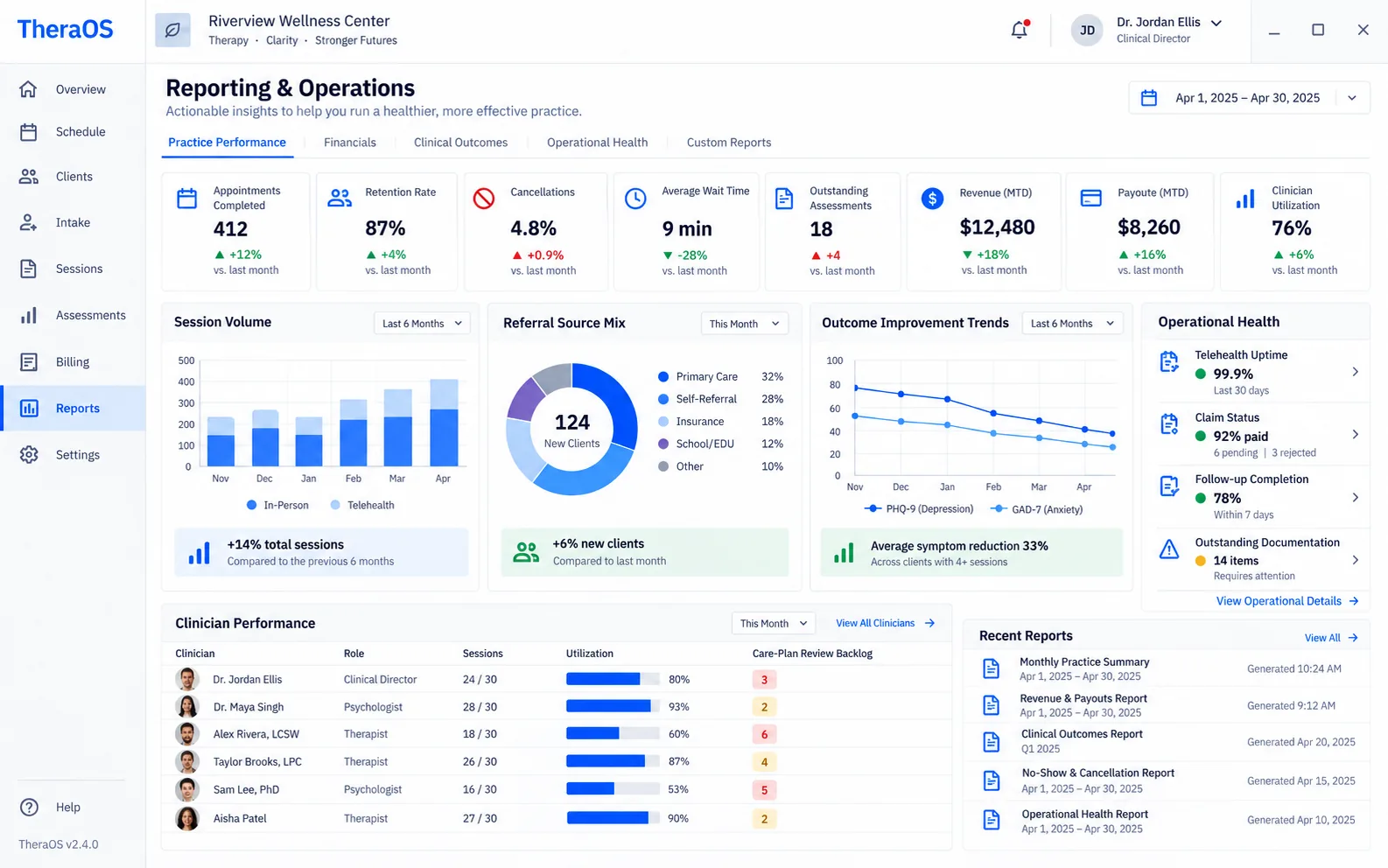
Most of the drag is not clinical judgment. It is finding the last note, rebuilding the intake, and closing the invoice in a different place.
Intake details are asked at the desk, then again in the session, because they never landed on the record.
History, consent and session notes sit in folders, inboxes and a second notebook.
The schedule says who is coming. Billing says who attended. Neither knows the other.
When the network drops, the session should not stop because the record cannot open.
TheraOS keeps the operational work next to the clinical record. It is configured around the modalities, consent and reporting the practice already uses.
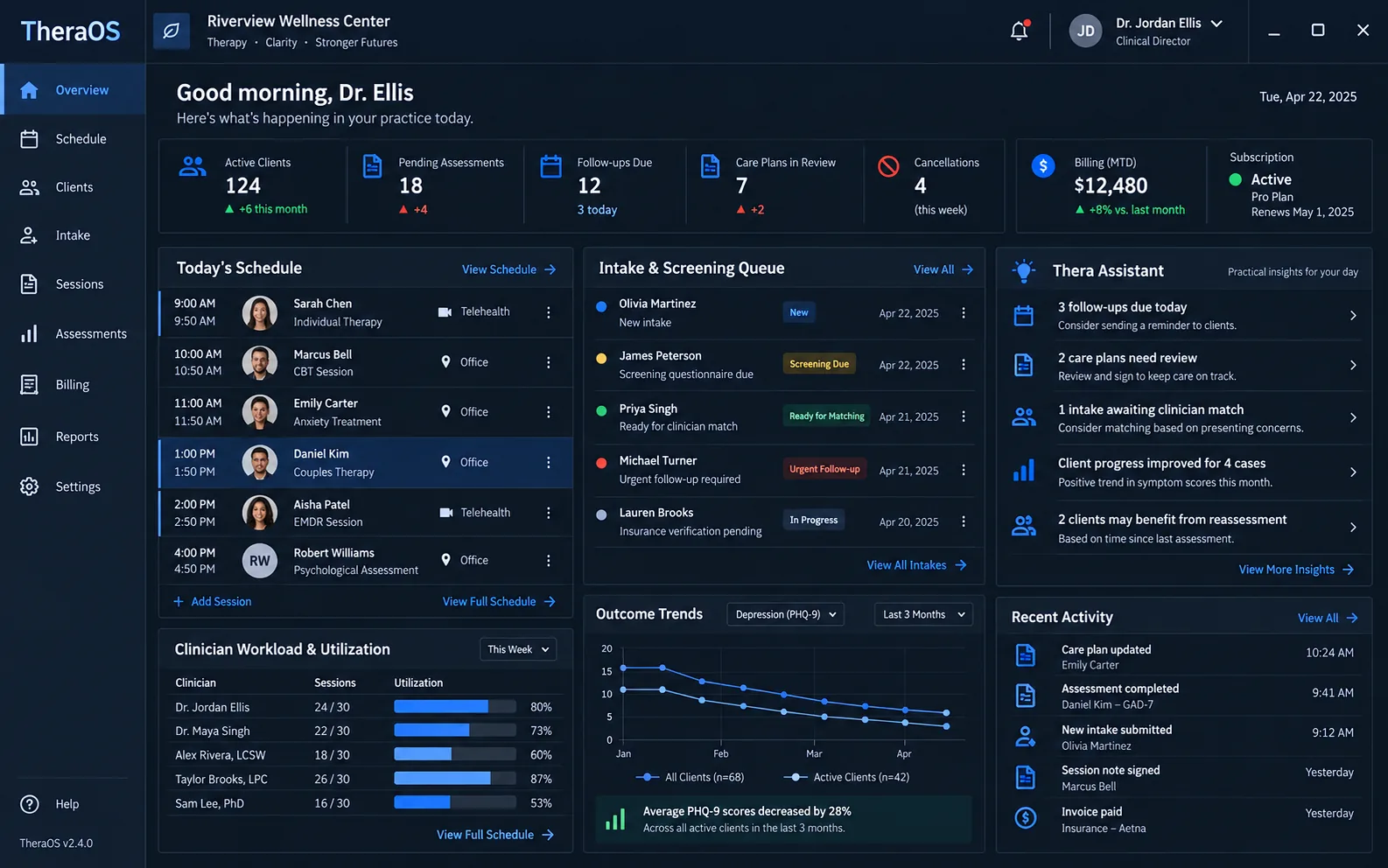
Registration, history and the practitioner the person is seeing. The record starts here and stays with them.
Practitioners and rooms, without two people booked into the same hour.
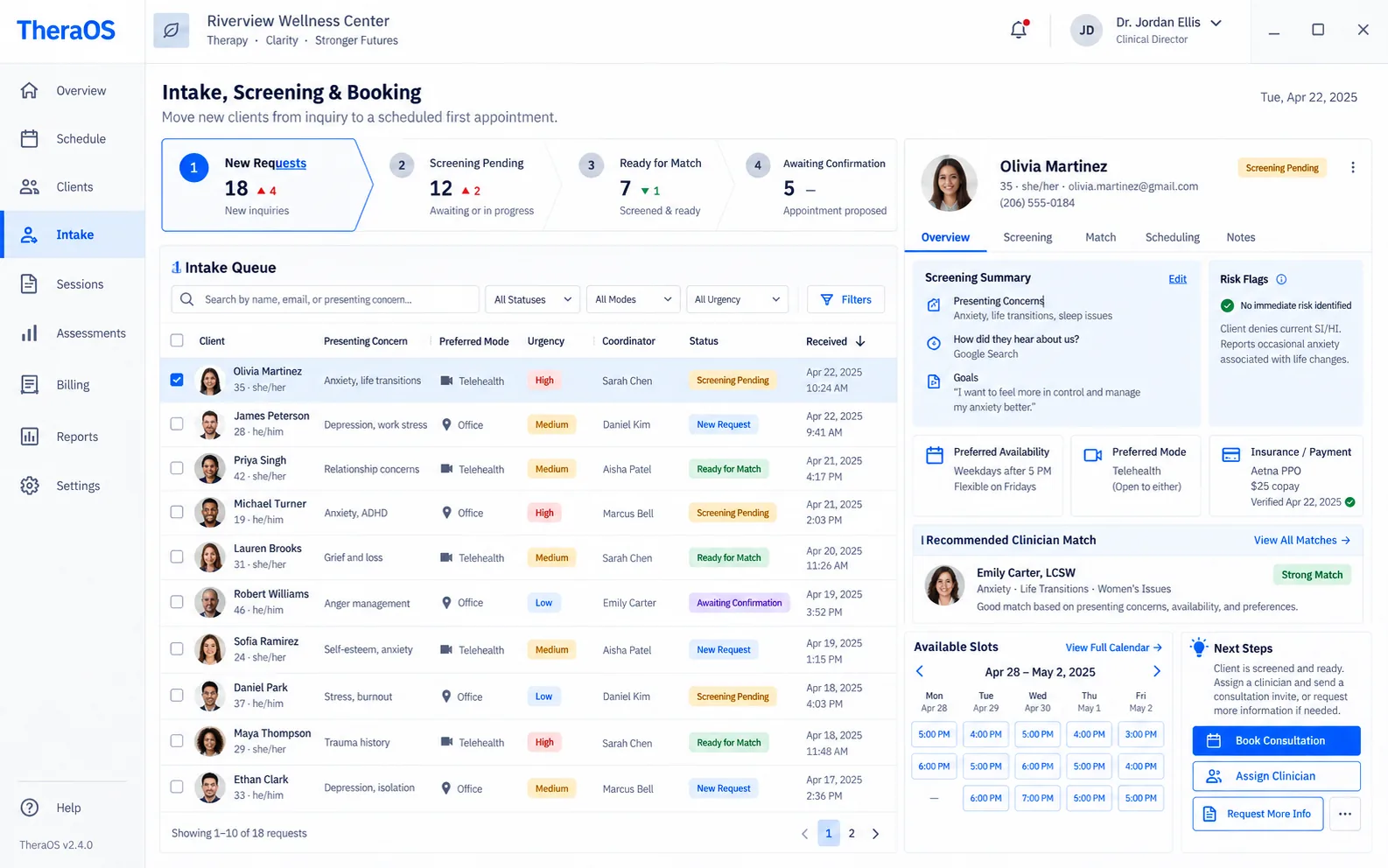
Consent, consultation notes and the sessions that follow, on one longitudinal record.
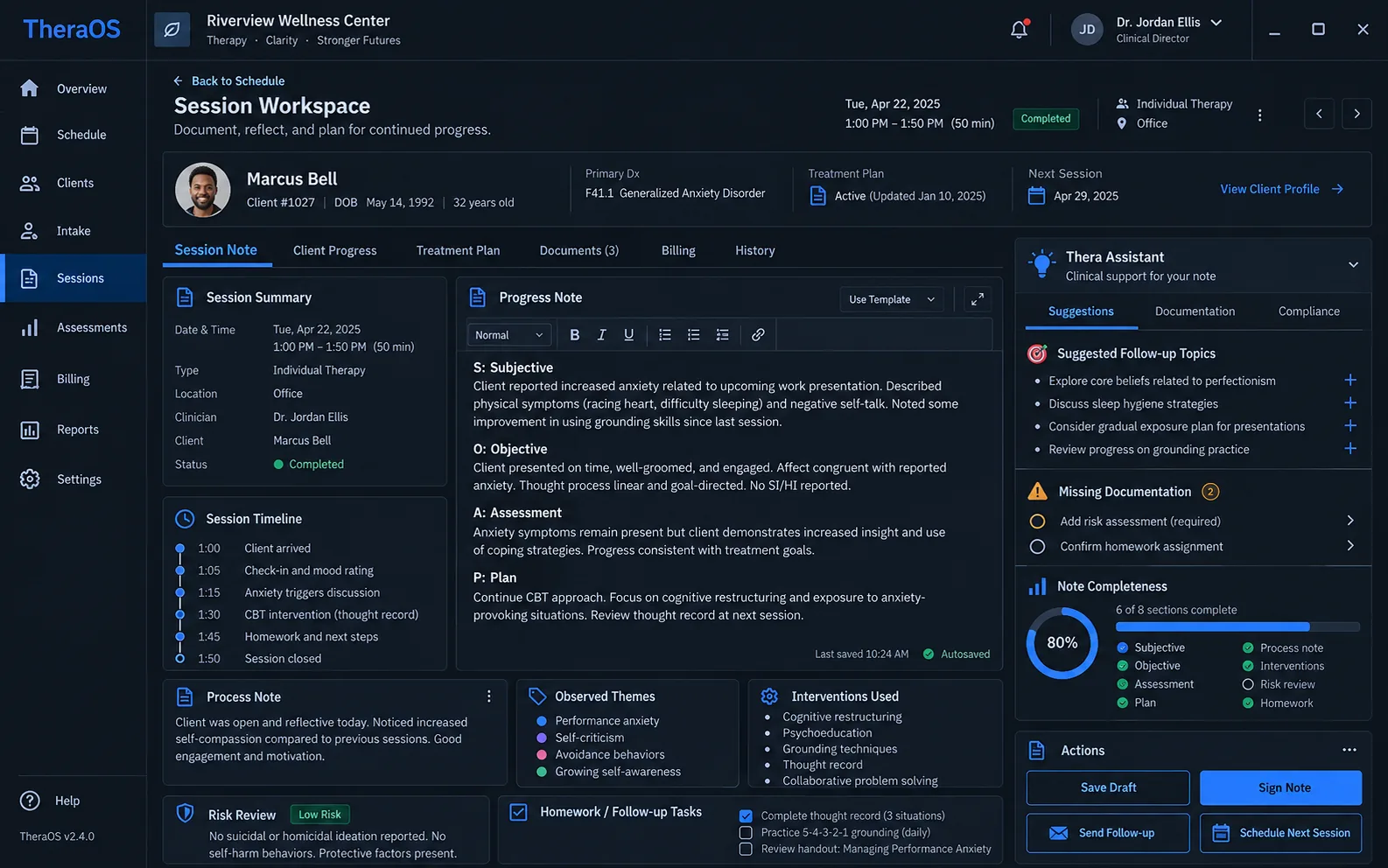
Attendance, packages and invoices. Payment setup is scoped with the practice.
The workspace is offline-capable. Work continues when the clinic network drops, then syncs. A move from spreadsheets or older practice software is part of setup, including staff onboarding.
Each stage adds to the same file. Authorised clinicians should not have to collect the same history again.
Registration, the first details, consent and who will see the person.
Structured assessments sit with the record, as material for the clinician. They do not decide the care.
Goals and the plan for this person, written by the clinician and kept with the file.
The appointment, the consultation note and the session history.
What changed across sessions, read from the same record. Charts that interpret progress are a later direction, not this release.
The next appointment, the ongoing plan, and the information the practice chooses to share with the patient.
Tell us how the practice works today. We reply with whether TheraOS fits, and what setup would cover.
Transform your practiceA patient portal is the place for appointments and the information the practice shares. It is a way to take part in the journey, not a second clinical record.
The schedule and the record are there so the day is not rebuilt from memory. Workload views and self-care tools are part of the product direction. They are not a separate module in this release.
Drafting notes, session summaries and operational dashboards with software assistance are a direction. TheraOS does not diagnose, prescribe or replace a clinical decision.
Therapy notes are not ordinary business data. The workspace is built so the practice can limit who sees what, record consent, and see who opened or changed a file.
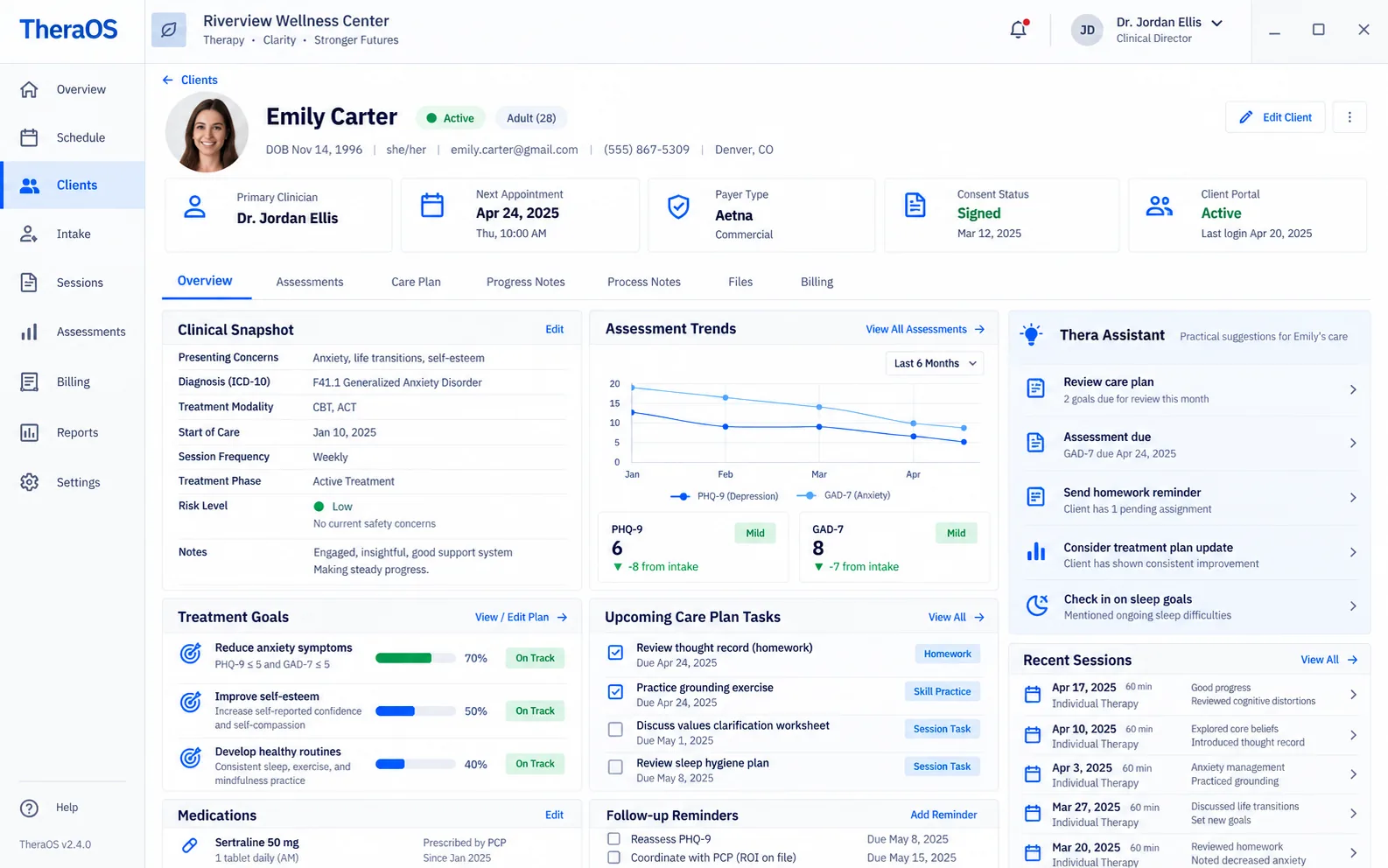
Permissions follow the job: clinician, front desk, billing, owner. A role sees the work it is responsible for.
Consent sits on the record with the history, not in a drawer. The practice decides which information a patient can see.
We scope hosting, access and retention to the privacy and healthcare duties of that practice. The page does not certify a regulation.
The subscription follows the number of practitioners, the locations and what the practice needs to run. The fit is confirmed on a demo. There is no price on this page.
A psychologist, counselor or psychotherapist who needs the day, the notes and the invoices in one place.
Several practitioners, shared rooms and a front desk that should see the same schedule.
More than one kind of care, still one record for the person.
The same workspace across clinics, with the schedule and the record still tied to the person.
Questions
Independent psychologists, counselors and psychotherapists, therapy clinics, multidisciplinary centres, and organisations with more than one location.
Patients, the schedule, the clinical record, consent, session notes, attendance, packages and invoices. Assessments and treatment plans stay on that same record. The clinician writes them.
TheraOS is offline-capable. Work continues, then syncs when the network returns.
No. It does not diagnose, prescribe or replace a professional decision. Note drafting and progress charts are a later direction, not this release.
By practitioners, locations and what the practice needs to run. We confirm that on a demo. Prices are not listed here.
Roles limit who can see a record. Consent sits with the file. Hosting, access and retention are scoped to the privacy duties that apply to the practice.
Request a demo
Tell us who you see, how you book, and where notes live now. We reply by email. No commitment.
We will reply by email. If you do not hear from us, use the contact page.