The problem
The same fact is entered in more than one tool. A manager cannot see the current state without asking someone.

Enterprise applications
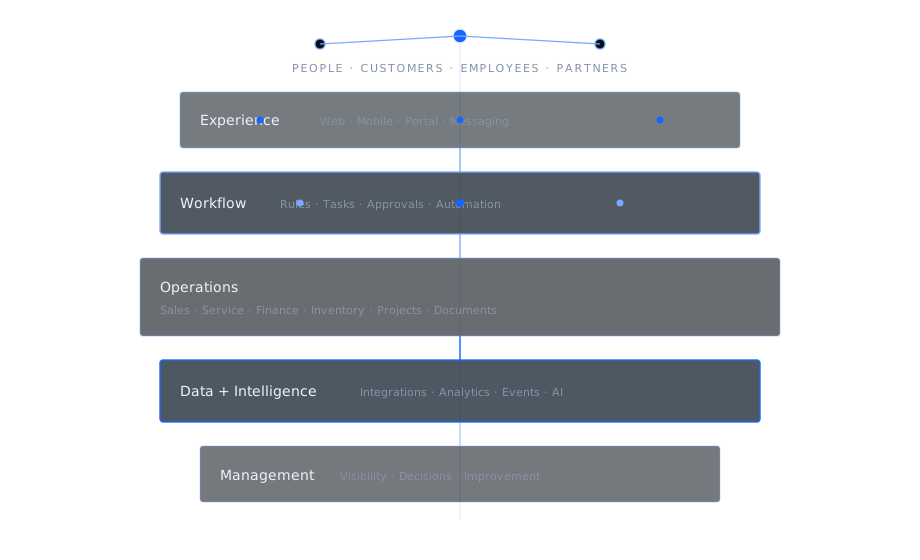
Approvals, records and hand-offs stop living in several tools. We start from a product we already run when it covers the work, build only the rules and screens it does not, and host the result.
The first conversation is the operation, not a platform catalogue. A large suite is the last option.
The same fact is entered in more than one tool. A manager cannot see the current state without asking someone.
The delay, the missing approval, and the person who is the only copy of the process. The screen still loads. The operation does not.
One application for that workflow. People who do the work can open it. A colleague can see who decided, and when.
Three parts. You do not commission a blank rebuild, and you do not get a product that ignores the process.
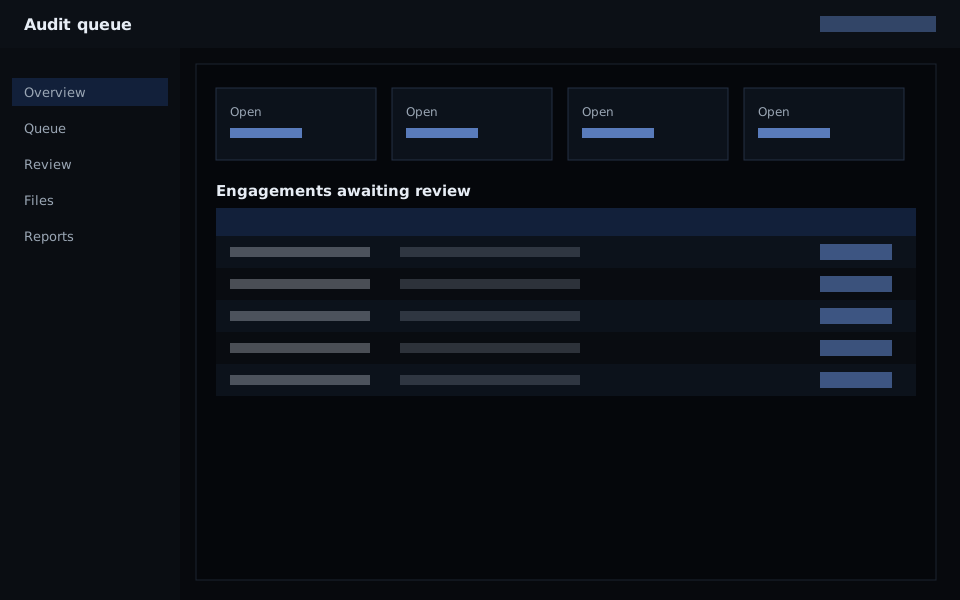
1 · Products
Audit, work, retail and operations products carry patterns we have already tested. The application stands on that base when it fits.
2 · Only the gap
Approval limits, screens, and links to the ERP, CRM or files you already run. If a product already does the step, we leave it.
3 · Hosting
Environment, updates and monitoring are a separate agreement. A build does not include them automatically.
Each engagement leaves documents and a running system. These are the items we agree up front.
Public examples of the same pattern. A new application reuses the product or the method, then builds only the gap. Measured client results are shared only with permission.
A system we build is a system we can run. The usual path is our environment, updates, monitoring and a named owner. A private environment on your cloud or network is available when the contract requires it. We do not promise uptime.
We will say which product already fits, what still has to be built, and how we would host it.